
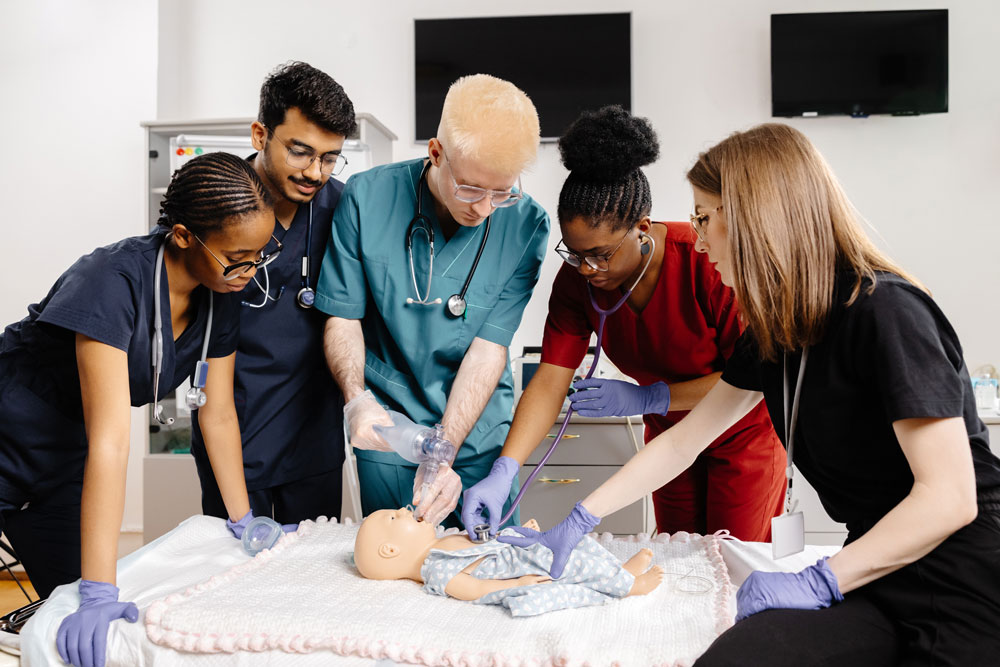
Rutgers School of Nursing offers New Jersey’s only Online Dual Pediatric Primary/Acute Care Nurse Practitioner DNP program, preparing nurses to provide comprehensive care for children and adolescents across primary, acute, and complex care settings. Students develop expertise in both pediatric primary and acute care, preparing them for dual national certification and a broad range of advanced practice opportunities.
Program Overview
Why Choose the Dual Pediatric Program at Rutgers?
Earn Dual Pediatric Certifications
Prepare for both Pediatric Primary Care and Pediatric Acute Care Nurse Practitioner certification, developing advanced expertise to care for children across the full continuum of pediatric healthcare, from health promotion and primary care to specialty, inpatient, acute, and critical care, while expanding your career opportunities across diverse pediatric settings..
Gain Comprehensive Pediatric Clinical Experience
Gain hands-on experience across the full continuum of pediatric care, from primary and specialty care to inpatient and high-acuity settings, with faculty-coordinated clinical placements and expert preceptors supporting both Primary and Acute Care preparation.
Expand Your Career Opportunities
Graduate prepared to provide comprehensive pediatric care across a broad range of healthcare settings and pursue advanced practice opportunities in primary care, acute care, specialty care, and hospital-based practice.
Flexible Learning for Working Nurses
Balance doctoral education with professional commitments through asynchronous online coursework and coordinated clinical experiences designed for working nurses.
All Pediatric Nursing Programs

Graduate Testimonial
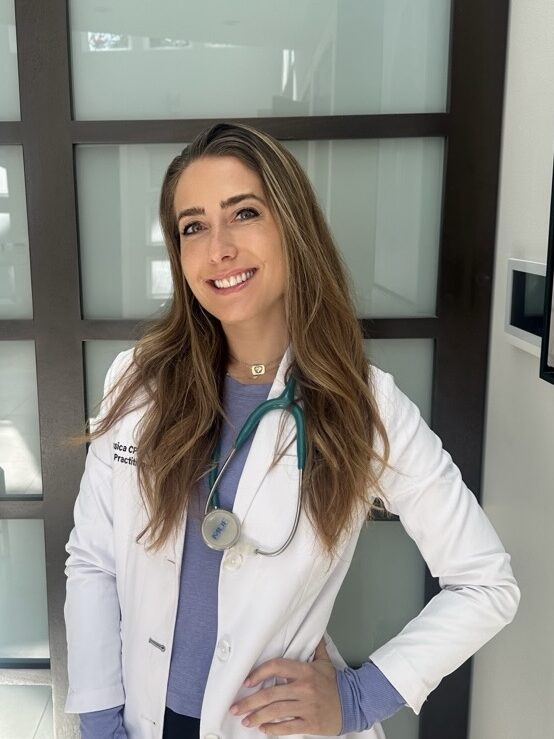
“Completing the Rutgers Pediatric Acute Care Post-Master’s Certificate program was one of the most transformative experiences of my career. Even after years as a Pediatric Nurse Practitioner in a busy emergency department, this program pushed me to think more sharply, practice with greater precision, and elevate my clinical expertise far beyond what I imagined.”
Jessica Brown, CPNP, AC/PC
Curriculum
The Dual Pediatric Primary/Acute Care Nurse Practitioner program admits students every fall and has the following requirements for graduation:
- 4-year plan of study (11 semesters)
- 84 Credits
- 1200 Clinical Hours (min.)
- The minimum number of combined clinical practicum and DNP project experience hours is 1,000. Students, however, may be required to complete more than 1,000 hours to meet minimum competency requirements for graduation and certification (when applicable).
- Graduates are eligible to take the national certification as an acute AND/OR primary care PNP offered through the Pediatric Nursing Certification Board (PNCB). You must have a minimum of one-year acute pediatric experience to apply to this program.
More information about the program:
- Classes are held online with required on-campus immersions.
- Immersions are on-campus experiences that provide hands-on skills and simulation activities at the Stanley-Bergen Building in Newark, New Jersey, required at strategic points in the program. View the immersion schedule below.
Immersions (On-Campus Experience)
On-campus immersions are a signature learning experience of this program. During these immersive sessions, you’ll strengthen your clinical skills through hands-on training, simulation, and skills assessments while collaborating with expert faculty and connecting with classmates. These experiences help build the confidence, competence, and professional relationships essential for success in nursing. Learn more about immersions.
| Item | Value |
|---|---|
| Immersions | 3 |
| Length | 3-4 days each |
| Location | Newark, NJ |
Immersion Schedule
| Semester | Course | Days (10 am – 5 pm) |
|---|---|---|
| Fall Year 3 (2028) | Foundations of Pediatric Care | Week 3 Tuesday Wednesday Thursday Friday |
| Summer Year 3 (2029) | Pediatric Acute Care Intensive | Week 3 Wednesday Thursday Friday |
| Spring Year 4 (2029) | Final Practicum | Week 10 Monday Tuesday Wednesday |
Four-Year Plan of Study: Fall Start
YEAR 1
Fall (6 credits)
NCOR 6010G Role Development & Foundations of Practice (3.00)
NCOR 6020G Epidemiology & Research for Evidence-Based Practice (3.00)
Spring (6 credits)
NCOR 6030G Scholarly Inquiry, Appraisal & Writing (3.00)
NCOR 6040G Health Data, Informatics & Tech (3.00)
Summer (3 credits)
NCOR 6050G Strategic Leadership & Partnerships (3.00)(35 DNP project hours)
YEAR 2
Fall (6 credits)
NCOR 6070G Evidence-Based Approaches to Advanced Nursing Practice (3.00)
NCOR 6060G Healthcare Delivery and Economics (3.00)(35 DNP project hours)
Spring (9 credits)
NCOR 6080G Advanced Population Health & Advocacy (3.00)
NCOR 5020G Advanced Health Assessment (3.00)
NCOR 5010G Advanced Pathophysiology (3.00)
Summer (6 credits)
NCOR 5040G Advanced Pediatric Pharmacology (3.00)
PED 5045G Advanced Pediatric Physiology and Assessment (3.00)
YEAR 3
Fall (11 credits)
PED 6210G Foundations of Ped Care 1 (4.00)(60 clinical hours)
PED 6015G Pediatric Primary Care Practicum 1 for Dual Students (2.00)(120 clinical hours)
PED 6120G Diagnostics, Procedures, and Clinical Reasoning for Acute Care (3.00)
NCOR 7000G DNP Project Preparation (2.00)(30 HRS)
Spring (11 credits)
PED 6220G Pediatric Common and Mild/Episodic Illnesses Theory 2 (3.00)
PED 6225G Pediatric Primary Care Practicum for Dual Students 2 (3.00)(180 clinical hours)***
PED 6310G Intro to Ped Acute Care Theory 1 (3.00)
NCOR 7010G DNP Pr. Pl. & Prop. Dev. (2.00)(70 DNP project hours)
Summer (8 credits)
PED 6320G Pediatric Acute Care Theory 2 (3.00)
PED 6415G Pediatric Acute Care Practicum Intensive 1 (5.00)(300 clinical hours)***
YEAR 4
Fall (9 credits)
PED 6230G Pediatric Advanced Care Theory 3 (3.00)
PED 6425G Pediatric Advanced Dual Practicum (4.00)(240 clinical hours)
NCOR 7020G DNP Proj. Imp. (2.00)(100 DNP project hours)
Spring (9 credits)
PED 6240G Pediatric Primary Care Review (1.00)
PED 6350G Pediatric Acute Care Review (1.00)
PED 6410G Pediatric PC & AC Final Practicum Intensive 2 (5.00)(300 clinical hours)***
NCOR 7030G DNP Proj. Eval. & Diss. (2.00)(50 DNP project hours)
SUMMARY
Total Program Credits: 84.00
Total Clinical Hours: 1,200
Total DNP Project Hours: 320*
Total DNP Program Hours: 1,520**
*Please refer to the Division of Advanced Nursing Practice Student Handbook for more details surrounding DNP Project courses, progression, and program completion timeline.
**The minimum number of combined clinical practicum and DNP project experience hours is 1,000. Students, however, may be required to complete more than 1000 hours to meet minimum competency requirements for graduation and certification (when applicable).
***This course requires in-person attendance for on-site immersions.
BS-to-DNP students must complete all program requirements within six (6) years of admission.
Four-Year Plan of Study: Spring Start
YEAR 1
Spring (6 credits)
NCOR 6020G Epidemiology & Research for Evidence-Based Practice (3.00)
NCOR 6030G Scholarly Inquiry, Appraisal & Writing (3.00)
NCOR 6040G Health Data, Informatics & Tech (3.00)
Summer (3 credits)
NCOR 6010G Role Development & Foundations of Practice (3.00)
NCOR 6050G Strategic Leadership & Partnerships (3.00)(35 DNP project hours)
YEAR 2
Fall (6 credits)
NCOR 6060G Healthcare Delivery and Economics (3.00)(35 DNP project hours)
NCOR 6070G Evidence-Based Approaches to Advanced Nursing Practice (3.00)
Spring (9 credits)
NCOR 5010G Advanced Pathophysiology (3.00)
NCOR 5020G Advanced Health Assessment (3.00)
NCOR 6080G Advanced Population Health & Advocacy (3.00)
Summer (6 credits)
NCOR 5040G Advanced Pediatric Pharmacology (3.00)
PED 5045G Advanced Pediatric Physiology and Assessment (3.00)
YEAR 3
Fall (11 credits)
PED 6210G Foundations of Ped Care 1 (4.00)(60 clinical hours)
PED 6015G Pediatric Primary Care Practicum 1 for Dual Students (2.00)(120 clinical hours)
PED 6120G Diagnostics, Procedures, and Clinical Reasoning for Acute Care (3.00)
NCOR 7000G DNP Project Preparation (2.00)(30 HRS)
Spring (11 credits)
PED 6220G Pediatric Common and Mild/Episodic Illnesses Theory 2 (3.00)
PED 6225G Pediatric Primary Care Practicum for Dual Students 2 (3.00)(180 clinical hours)***
PED 6310G Intro to Ped Acute Care Theory 1 (3.00)
NCOR 7010G DNP Pr. Pl. & Prop. Dev. (2.00)(70 DNP project hours)
Summer (8 credits)
PED 6320G Pediatric Acute Care Theory 2 (3.00)
PED 6415G Pediatric Acute Care Practicum Intensive 1 (5.00)(300 clinical hours)***
YEAR 4
Fall (9 credits)
PED 6230G Pediatric Advanced Care Theory 3 (3.00)
PED 6425G Pediatric Advanced Dual Practicum (4.00)(240 clinical hours)
NCOR 7020G DNP Proj. Imp. (2.00)(100 DNP project hours)
Spring (9 credits)
PED 6240G Pediatric Primary Care Review (1.00)
PED 6350G Pediatric Acute Care Review (1.00)
PED 6410G Pediatric PC & AC Final Practicum Intensive 2 (5.00)(300 clinical hours)***
NCOR 7030G DNP Proj. Eval. & Diss. (2.00)(50 DNP project hours)
SUMMARY
Total Program Credits: 84.00
Total Clinical Hours: 1,200
Total DNP Project Hours: 320*
Total DNP Program Hours: 1,520**
*Please refer to the Division of Advanced Nursing Practice Student Handbook for more details surrounding DNP Project courses, progression, and program completion timeline.
**The minimum number of combined clinical practicum and DNP project experience hours is 1,000. Students, however, may be required to complete more than 1000 hours to meet minimum competency requirements for graduation and certification (when applicable).
***This course requires in-person attendance for on-site immersions.
BS-to-DNP students must complete all program requirements within six (6) years of admission.
Graduate Testimonial
“The Dual Primary and Acute Care Pediatric Nurse Practitioner DNP Program has helped me grow into a confident provider, leader, educator, and advocate for children and their families. Through rigorous coursework, diverse clinical experiences, evidence-based practice, and DNP project work, I have strengthened my clinical reasoning and developed the skills to care for children across the spectrum of health needs, from prevention and health promotion to acute, complex, and critical illness.”
Brittany Welsh

Admissions
Fall (September) Start Deadlines
- Priority Application Deadline: March 1 – Apply by this date for priority consideration and to receive your admission decision sooner.
- Final Application Deadline: July 1 – Applications are accepted on a rolling basis until this date, with full consideration for all applicants.
Spring Start Deadline: December 1
Ready to take the next step? Here’s what you need to apply to the DNP Pediatric Primary Care DNP program at Rutgers School of Nursing:
Admissions Requirements
- Minimum of a Bachelor’s degree in nursing from a nationally accredited program
- Preferred GPA of 3.2 or higher on a 4.0 scale
- Current unencumbered RN license. A New Jersey or Compact State RN license will be required after acceptance to the program and within the first semester of study. Students are required to maintain current licensure throughout the program.
- Minimum of 1 year acute care pediatric nursing experience
- PALS certification
- Resume/CV
- Official transcript(s) of all prior college work
- Fully submitted online application, including paid application fee
- A Personal Statement, limited to two pages, which includes the following:
- How have your personal qualities and experiences influenced your career choice, and how will they contribute to attaining this degree?
- Discuss your reasons for choosing this specialty in relation to your career goals. How will this degree impact your care of the population you expect to serve after graduation?
- Two letters of reference that speak to the candidate’s skills, abilities, and experiences that support their success in this program.
- One reference must be provided by a former faculty member or a professional colleague.
- At least one letter should be from an individual in a supervisory role.
- If necessary, an interview may be offered to qualified applicants.
*Please note that GRE testing is not required.
Transcripts
Applicants are required to submit official transcripts for all previous college work.
- Electronic transcripts (recommended) can be sent to:
e-transcripts@gradadm.rutgers.edu - Paper transcripts can be sent to University Enrollment Services Admissions Processing, Rutgers, The State University of New Jersey, 65 Davidson Road, Suite 308, Piscataway, NJ 08854-8097
Newly admitted students must submit updated official transcripts/documents verifying completion of all “in progress” degrees, coursework, or licensure before starting the program. Failure to comply will result in admission being rescinded.
For Rutgers Graduates Only: The School of Nursing Admissions Office will automatically obtain your Rutgers academic transcript after you submit your online application. You do not need to provide it yourself. However, you must still submit transcripts from any non-Rutgers schools you attended.
Application Tips
- Applicants can view their most current admissions status through the online application system.
- The online application contains an admissions checklist, which must be completed in order to be considered for admission to the program.
- Applicants are required to submit admission documents through the online application system (the applicant checklist).
- Once the admissions process begins, applicants with fully completed applications (all supporting documentation received) generally receive their admissions decision within 2-3 weeks.
Tuition, Fees, and Scholarships
Learn more about Rutgers University tuition and fees – refer to “School of Nursing (Graduate)”.
Rutgers School of Nursing is proud to offer a variety of scholarship opportunities to support our undergraduate and graduate students.
International Applicants
The School of Nursing’s Division of Advanced Nursing Practice welcomes applications from international students. We encourage you to explore the resources available through Rutgers Global – International Students and Scholars. Please note: Our programs do not qualify for F-1 or J-1 visa sponsorship. Applicants should ensure that they hold or are eligible for another visa type before applying. View info for international applicants.
Licensure Disclosure for Pediatric NP Program
- View Professional Licensure Disclosures for the Dual Acute Care/Primary Care Pediatric NP program.
- Distance and Experiential Learning Disclosures and Approvals
Licensure & Clinical Compliance for Nursing Programs
At Rutgers School of Nursing, we are dedicated to preparing ethical and skilled nursing professionals. To be licensed in most states, a criminal history background check is a prerequisite for licensure as a registered professional nurse (RN) per the state’s Board of Nursing. Since eligibility criteria may vary, applicants should check with the Board of Nursing of the state in which they plan to apply for licensure to determine the eligibility criteria.
See our Nursing Licensure Requirements page for more information
All nursing students in clinical courses are required to complete a criminal history background check. Depending on your program, clinical sites may require additional screening, such as drug testing and/or fingerprinting, to ensure compliance with their policies and standards. Please review Clinical Clearance Requirements for individual Rutgers nursing programs. These practices reflect the nursing profession’s commitment to trust, accountability, and community safety. If you have questions or need support, our team is here to help guide you on your journey.
Accessibility Accommodations
Many students have questions about disclosing their disability needs when they apply to Rutgers Health programs. The short answer is you don’t have to disclose if you’re not comfortable sharing that information with us at the application stage. Some examples of accommodations needed may include, but are not limited to, sign language interpreters, interviewing accommodations, or accommodations during visitation. If you need accessibility accommodations during the application or interview process for admissions at Rutgers Health, you can explore your options by contacting the Rutgers Health Office of Disability Services or by calling 973-640-0058.
Rutgers Health doesn’t discriminate against students with disabilities, and students are not required or expected to disclose disabilities when they apply to Rutgers Health Programs, unless accommodations are needed during the application process. You can rest assured that we are committed to creating an equal-access environment and supporting your needs during your time at Rutgers.
Pediatric Program Leadership

Margaret Quinn is a Clinical Professor and the Pediatric NP Program Specialty Director. She is a certified nurse educator and certified primary care pediatric nurse practitioner whose academic and clinical focus is on issues impacting children’s health. Dr. Quinn is also a Fellow of the American Academy of Nurse Practitioners (FAANP) and board member for the American Faculty of Pediatric Nurse Practitioners (AFPNP)

Meghan Faulkner is the Pediatric Acute Care Track Coordinator and Clinical Instructor. She is a pediatric acute care certified nurse practitioner with over 13 years in advanced practice nursing and over 18 years in pediatric nursing in various surgical and critical care settings, both in the US and the United Kingdom.